
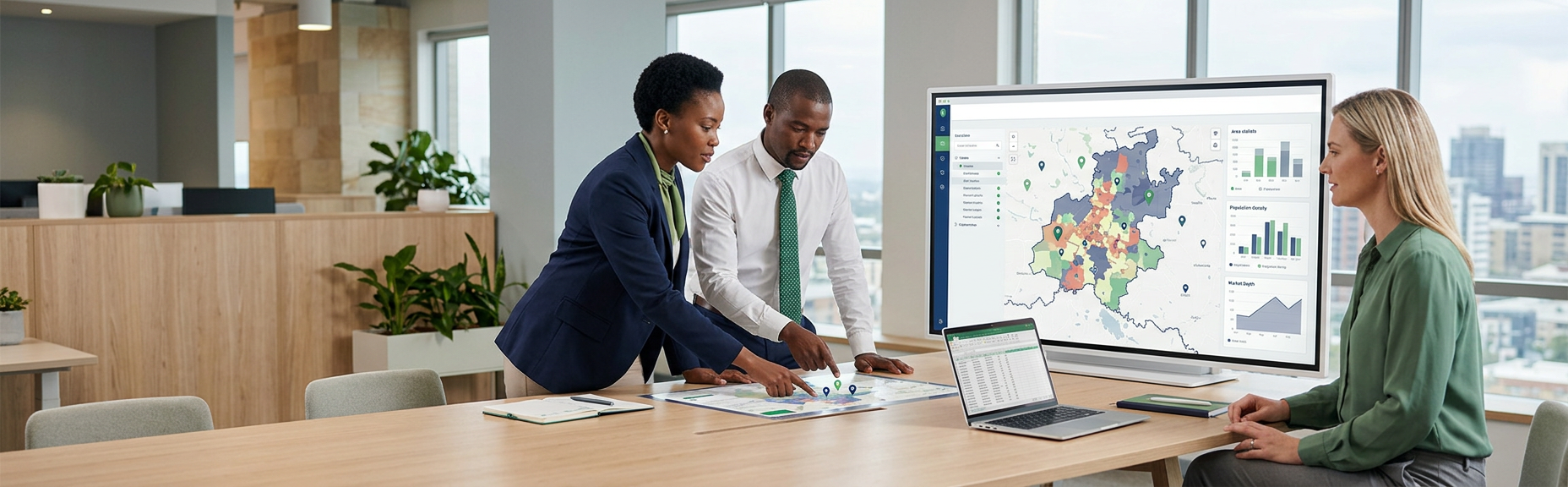
What an area profile reveals
An area profile combines several views of a location. Demographics indicate customer fit and potential affordability. Retail context shows nearby stores, centres and competing destinations. The map adds settlement patterns, routes, barriers and the relationship with the wider network.
Each layer answers a different part of the decision:
- Market depth: Is there a meaningful base of potential customers within the relevant area?
- Customer fit: Do local households resemble the people the brand is designed to serve?
- Retail context: Which centres, stores and competitors already influence shopping behaviour?
- Network role: Would the site add coverage, fill a gap or overlap with an existing location?
- Accessibility: Can the intended customer reach the site in a practical way?
No single indicator should make the decision. Population may not match the target market, while income potential may be offset by limited access or strong competition. The value lies in considering the factors together.
For a closer look at the people component, read What Demographic Data Should You Review Before Choosing a Site?
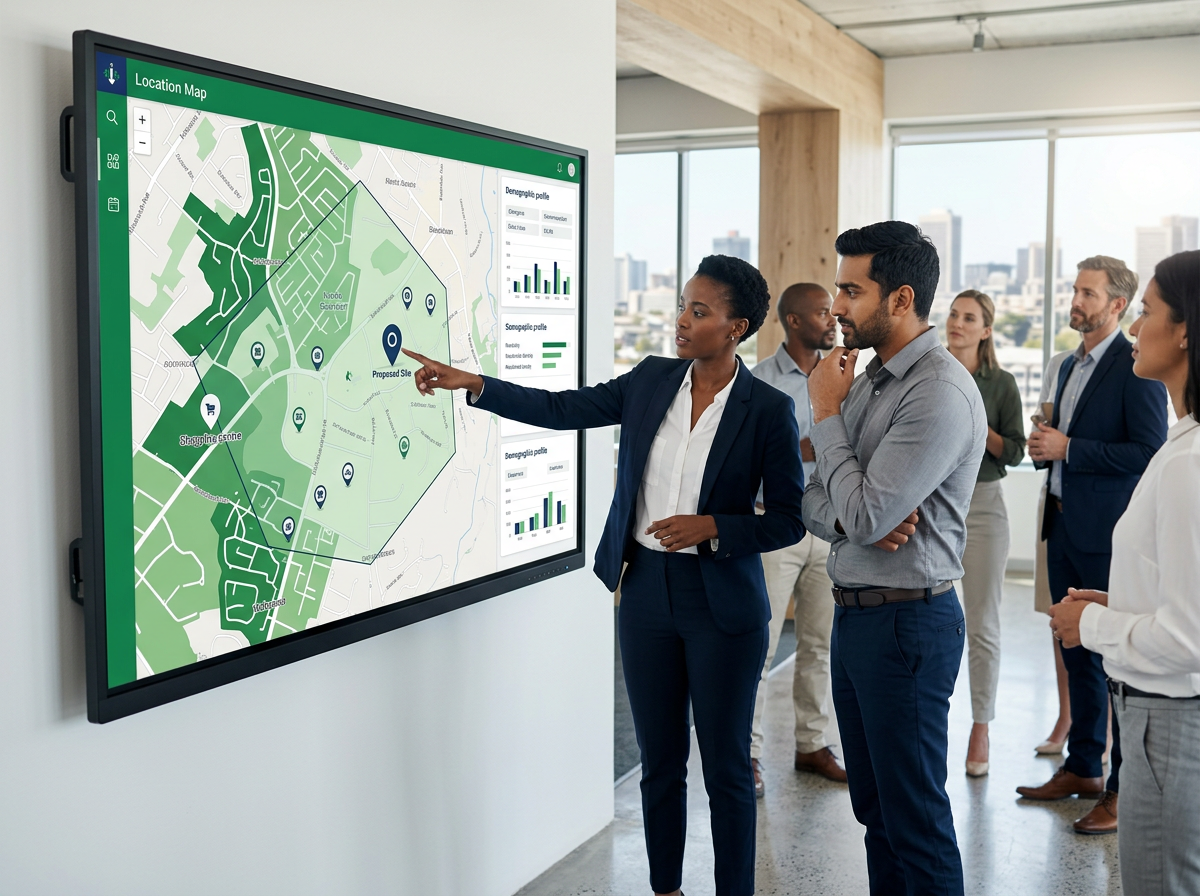
Create a clean, landscape-format editorial visual of a South African suburban retail area in a LEO-inspired map interface. Show one proposed site pin, a clearly defined catchment polygon, residential density shading, two shopping-centre markers, nearby retailer markers and a side panel with demographic profile cards. Keep labels legible but generic; use the Lightstone visual language without inventing performance figures.
See the market around the point
When the different layers are viewed spatially, relationships that are difficult to find in a spreadsheet become easier to understand. A proposed store may sit close to a large residential community but be separated from it by a highway. Two areas with similar population totals may have very different income profiles, retail provision or access routes. A competitor may appear nearby in straight-line distance while serving a different practical catchment.
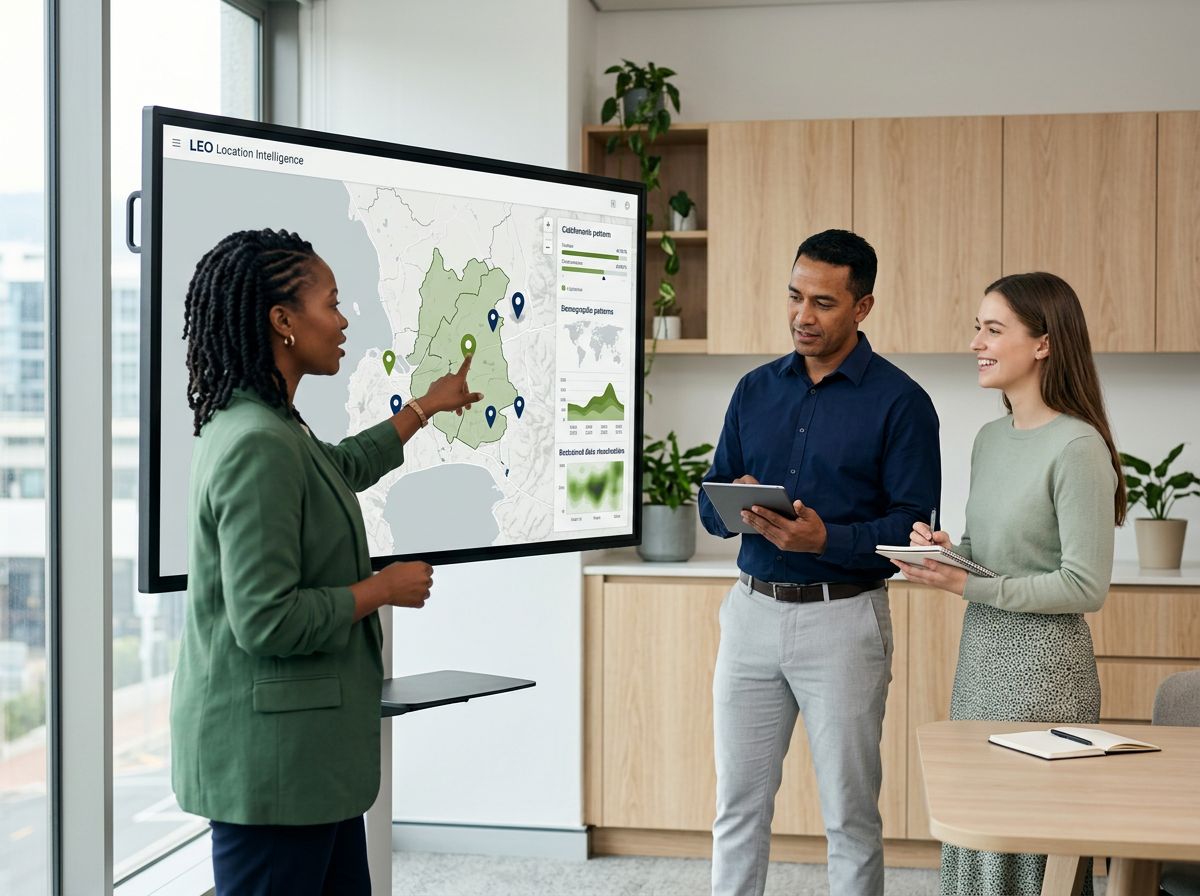
LEO, Lightstone’s interactive geospatial platform, brings location data, demographics and retail context into one map-based environment. Lightstone’s South African data foundation includes more than 1,900 malls and 60,000 stores, supported by data updated annually.
A site recommendation becomes stronger when the team can explain not only where the property is, but who the market is, how the area works and why the opportunity fits the network.
Build the profile around the decision
Useful area profiling begins with a clear site hypothesis. Before reviewing the data, define what success would require. A convenience format may need proximity, repeat visits and easy access. A destination format may draw from a wider market. A value-led offer and a premium offer may evaluate the same area very differently.
A practical workflow is:
- Define the customer and store role. State who the location should serve and what gap it should address.
- Choose a meaningful study area. Use an appropriate radius or polygon. What Is Catchment Analysis? explains the options.
- Review market context. Examine population, income, age, employment, lifestyle characteristics and retail activity.
- Apply a benchmark. Use successful stores, network criteria or other candidates to interpret what “good” means.
- Test the risks. Look for barriers, competitive pull, overlap and weak customer access.
- Record the recommendation. Capture the evidence, assumptions and open questions.
This approach helps prevent a common error: collecting every available data point without deciding which ones matter. Area profiling should make the choice clearer, not create a larger information pack.
Turn exploration into a business-ready recommendation
LEO helps analysts explore the market, adjust boundaries and compare sites. Once the preferred view is clear, the LEO Market Report turns map context, demographics, household income, age, employment and nearby retail insight into a structured output.
A Market Report can be generated in minutes for a selected radius or polygon, making it useful for a shortlisting meeting, property motivation or expansion proposal.
The report does not replace commercial judgement, property due diligence or an on-site visit. It gives those activities a better foundation. It also creates a record of what the team understood about the market when the recommendation was made.
If the next step is to compare candidates, see How to Compare Two Business Locations More Effectively. For a wider risk framework, read How to Reduce Risk When Choosing a New Store Site.
What to remember
- Area profiling explains the market around a site, not just the address itself.
- The strongest profiles combine demographics, retail context, access, competition and network fit.
- Criteria should reflect the target customer and intended store format.
- Comparable boundaries and benchmarks make recommendations more consistent.
- LEO supports interactive spatial investigation, while the Market Report packages the chosen view for business use.
- Data should guide due diligence and site visits, not replace them.
Build a site recommendation your business can stand behind
Evaluating a live opportunity or improving your site-selection process? Explore the market in LEO, create a decision-ready Market Report, or talk to the Lightstone Explore team about the locations and questions your team needs to assess.
Better site decisions begin with better market context
Area profiling helps teams replace a narrow property view with a fuller understanding of demand, customer fit, competition and network role. The result is not a guarantee that a store will succeed. It is a more transparent, repeatable and defensible way to decide which opportunities deserve further investment. With LEO for exploration and a Market Report for communication, the map becomes a practical part of the business decision.